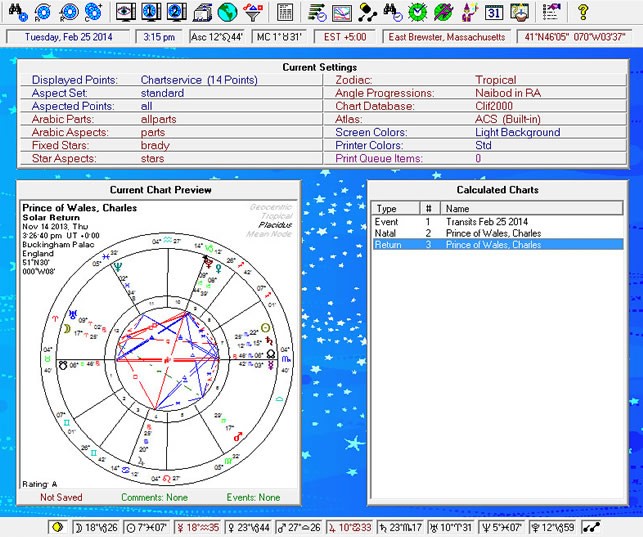
In astrology, aspects are the angles formed between planets, points, or sensitive areas of a chart. Understanding how aspects are formed helps astrologers interpret the interaction of planetary energies and the dynamics in a natal or transit chart.
1. The Geometrical Basis of Aspects
- Aspects arise because of the angular relationships between planets on the ecliptic plane.
- Each planet occupies a specific degree of a zodiac sign. The angle between two planets determines the type of aspect.
- Certain angles (0°, 60°, 90°, 120°, 180°) are considered major aspects, while others (30°, 45°, 135°, 150°) are minor aspects.
Key Principle:
- Exact aspect → exact angle between planets.
- Within orb → deviation from exact angle still counts as valid.
2. Why Aspects Form
- Planetary Motion
- Planets move at different speeds along the zodiac.
- Faster-moving planets (e.g., Moon, Mercury) create aspects more frequently.
- Slower-moving planets (e.g., Jupiter, Saturn) form aspects less often but with longer-lasting influence.
- Relative Positions on the Zodiac
- The position of planets relative to each other determines the angle of interaction.
- Harmonious angles → benefic aspects (trine, sextile).
- Tense angles → challenging aspects (square, opposition).
- Orb Allowance
- Orbs allow slight deviation from exact angles, making aspects active over a range of degrees.
- Orbs vary depending on planet type, aspect type, and chart context.
3. Planetary Interaction and Energy Flow
- Aspects connect planetary energies, showing how they cooperate or conflict.
- Planets in harmonious aspects support each other, creating flow, talent, or ease.
- Planets in challenging aspects create tension, obstacles, or lessons that promote growth.
Example:
- Mars square Saturn → tension between desire/action (Mars) and restriction/discipline (Saturn).
- Venus trine Jupiter → ease in relationships, creativity, and abundance.
4. Observing Aspects in Real Charts
- Measure the Angle
- Calculate the angular distance between two planets in degrees.
- Compare with Aspect Types
- Check if the angle matches a major or minor aspect within the allowable orb.
- Assess Influence
- Consider planets’ dignity, house placement, speed (direct or retrograde), and other aspects for full interpretation.
Conclusion
Aspects “arise” naturally due to the relative positions and motions of planets in the zodiac. Understanding their formation helps astrologers:
- Predict planetary interactions.
- Identify strengths, challenges, and opportunities in a chart.
- Integrate aspects with signs, houses, and planetary dignity for a comprehensive analysis.