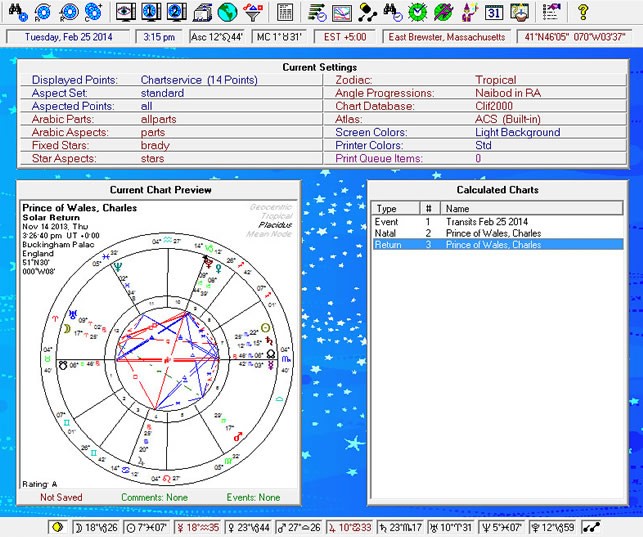
In Mundane Astrology, planets symbolize the collective forces that shape civilization — politics, economics, wars, revolutions, beliefs, and social evolution.
While natal astrology links planets to personal psychology, mundane astrology interprets them as archetypes of power, structure, and transformation acting upon nations and humanity as a whole.
☀️ The Sun — The Leader and National Vitality
The Sun represents leadership, authority, and the will of the nation.
It shows the government’s strength, the ruler’s popularity, and the overall vitality of the state.
- Strong Sun → confident, stable leadership
- Afflicted Sun → power struggles, loss of direction
Example: When the Sun was eclipsed in 1999, several world leaders faced political instability and resignations.
🌙 The Moon — The People and Public Mood
The Moon rules the masses, public emotion, and collective mood.
It reflects the nation’s internal security, habits, and daily well-being.
- Harmonious Moon → unity, morale, social comfort
- Stressed Moon → fear, unrest, instability
Example: During the 2020 pandemic, afflicted lunar transits symbolized widespread public anxiety and emotional exhaustion.
☿ Mercury — Communication, Trade, and Media
Mercury governs transport, education, commerce, and national discourse.
It reveals how information flows and how efficiently a society thinks, learns, and trades.
- Strong Mercury → innovation, diplomacy, transparency
- Malefic aspects → misinformation, cyberattacks, market manipulation
Example: Uranus–Mercury alignments often coincide with technological breakthroughs or digital revolutions.
♀ Venus — Diplomacy, Peace, and Cultural Expression
Venus symbolizes harmony, diplomacy, alliances, and artistic values.
It shows the nation’s ability to maintain peace and attract prosperity.
- Well-aspected Venus → peace treaties, cultural flourishing
- Afflicted Venus → broken alliances, moral decline, economic inequality
Example: Venus–Jupiter aspects often mark periods of peace and cultural revival (e.g., postwar renaissances).
♂ Mars — War, Conflict, and Military Power
Mars represents aggression, courage, and military action.
It’s the planet of war, police, and social activism.
- Strong Mars → national defense, productivity, assertiveness
- Afflicted Mars → war, violence, internal rebellion
Example: The outbreak of World War II occurred under intense Mars–Pluto tension, signaling explosive aggression and totalitarian rise.
♃ Jupiter — Expansion, Justice, and Prosperity
Jupiter symbolizes growth, law, religion, education, and optimism.
It brings expansion, prosperity, and moral or intellectual development.
- Strong Jupiter → prosperity, international cooperation, legal progress
- Weak Jupiter → corruption, ideological confusion
Example: Periods of Jupiter–Uranus alignment often bring discovery, innovation, and social liberation.
♄ Saturn — Structure, Law, and Restriction
Saturn rules governments, institutions, law, discipline, and limitation.
It stabilizes but can also repress.
- Positive Saturn → organization, maturity, enduring progress
- Negative Saturn → fear, control, economic depression
Example: The Great Depression (1929–1933) corresponded with a Saturn–Pluto period of structural breakdown and rebuilding.
♅ Uranus — Revolution, Technology, and Freedom
Uranus embodies sudden change, rebellion, reform, and scientific advancement.
It disrupts stagnant systems to restore freedom and innovation.
- Strong Uranus → innovation, progress, invention
- Afflicted Uranus → chaos, rebellion, revolution
Example: Uranus in Aquarius (1995–2003) coincided with the internet revolution and digital globalization.
♆ Neptune — Ideology, Faith, and Illusion
Neptune governs religion, ideology, deception, imagination, and mass psychology.
It rules both inspiration and delusion — spiritual awakening or mass confusion.
- Positive Neptune → compassion, creativity, collective unity
- Negative Neptune → propaganda, addiction, false ideals
Example: The 1918 flu pandemic and 2020 COVID crisis both occurred under strong Neptune patterns — symbolizing invisible spread and collective fear.
♇ Pluto — Power, Transformation, and Destruction
Pluto symbolizes death, rebirth, hidden power, and deep transformation.
It brings destruction before renewal, purging corruption and rebuilding structure.
- Strong Pluto → regeneration, empowerment, reform
- Negative Pluto → tyranny, collapse, manipulation
Example: Pluto in Capricorn (2008–2024) aligns with the global financial crisis, restructuring of power, and decline of old political orders.
Summary
Planet | Symbolizes | Collective Theme |
|---|---|---|
| Sun | Leadership | Authority & vitality |
| Moon | People | Public mood & unity |
| Mercury | Mind | Communication & trade |
| Venus | Harmony | Peace & culture |
| Mars | Action | Conflict & defense |
| Jupiter | Growth | Law & prosperity |
| Saturn | Order | Structure & limitation |
| Uranus | Change | Revolution & technology |
| Neptune | Vision | Faith & illusion |
| Pluto | Power | Death & rebirth |