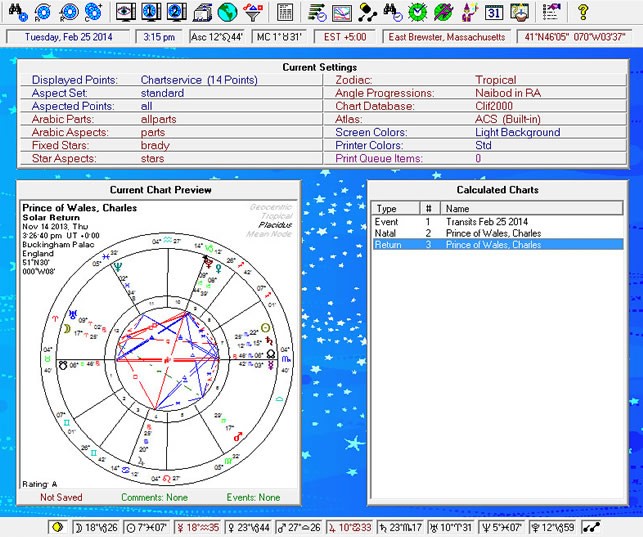
Classical astrology provides a structured approach to interpreting a natal chart. By following a step-by-step method, astrologers can analyze personality, life events, strengths, weaknesses, and potential challenges with precision.
Step 1: Examine the Ascendant (Rising Sign)
- Purpose: The Ascendant represents the personality’s outward expression, physical appearance, and initial approach to life.
- Method:
- Note the sign, degree, and ruling planet.
- Analyze how the rising sign sets the tone for the entire chart.
- Keywords: Personality, physical traits, approach to life.
Step 2: Analyze the Sun and Moon
- Sun: Core identity, ego, life purpose.
- Moon: Emotions, instincts, inner needs, and reactions.
- Method:
- Consider their signs, houses, aspects, and dignity (essential and accidental).
- Keywords: Ego, motivation, emotional patterns.
Step 3: Examine Planetary Positions
- Planets to analyze: Mercury, Venus, Mars, Jupiter, Saturn, Uranus, Neptune, Pluto.
- Method:
- Look at signs, houses, aspects, and dignities.
- Identify strengths, weaknesses, talents, and challenges.
- Keywords: Communication, relationships, drive, expansion, discipline, innovation, intuition, transformation.
Step 4: Study the Houses
- Purpose: Each of the 12 houses represents a life area.
- Method:
- Note which planets occupy each house.
- Examine the ruling planets of empty houses.
- Keywords: Life domains, focus areas, challenges, opportunities.
Step 5: Assess Aspects
- Purpose: Aspects show planetary interactions, forming harmony or tension.
- Major aspects: Conjunction, opposition, square, trine, sextile.
- Minor aspects: Quincunx, semisextile, quintile, sesquiquadrate.
- Method:
- Analyze exact aspects first, then near aspects.
- Consider both major and minor influences.
- Keywords: Interaction, harmony, tension, growth.
Step 6: Consider Essential and Accidental Dignities
- Purpose: Determine planets’ strength and effectiveness in the chart.
- Method:
- Essential dignity: rulership, exaltation, triplicity, term, face.
- Accidental dignity: house placement, aspects, speed, stationing.
- Keywords: Power, weakness, effectiveness, influence.
Step 7: Evaluate Special Points
- Examples: Ascendant ruler, Part of Fortune, Vertex, Arabic Parts, Chiron, fixed stars.
- Purpose: These points highlight fate, opportunity, challenges, and hidden talents.
- Method: Integrate them into the overall interpretation.
- Keywords: Destiny, hidden potential, karmic lessons.
Step 8: Integrate Everything
- Purpose: Form a cohesive narrative about the person’s life, personality, and potential.
- Method:
- Connect signs, houses, planets, aspects, and special points.
- Note recurring themes, dominant elements, and key patterns.
- Keywords: Synthesis, holistic understanding, life themes.
🔑 Summary
- Ascendant → Personality & physical traits
- Sun & Moon → Core identity & emotional nature
- Planets → Talents, drive, relationships, challenges
- Houses → Life areas & focus
- Aspects → Planetary interactions
- Dignities → Planetary strength & weakness
- Special points → Hidden talents, fate, karmic lessons
- Integration → Complete life narrative