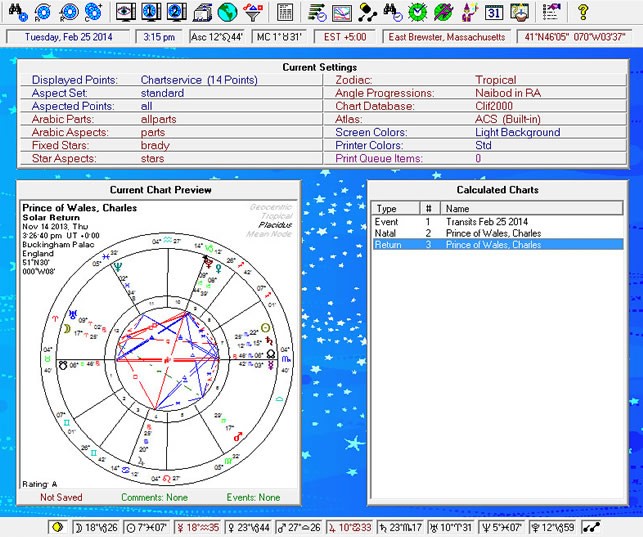
Astrology offers multiple methods to predict events and understand life cycles. These timing techniques help astrologers determine when energies are most active, providing insight into opportunities, challenges, and personal growth.
🔹 1. Planetary Transits
- Definition: Current planets forming aspects to natal planets or points.
- Focus: External events and triggers.
- Duration: Short-term (inner planets) to long-term (outer planets).
🔹 2. Secondary Progressions
- Definition: Symbolic movement of natal planets (1 day = 1 year).
- Focus: Internal psychological growth and evolution.
- Example: Progressed Moon changing sign → emotional focus shift.
🔹 3. Profections
- Definition: Hellenistic technique assigning a house/year theme based on age.
- Focus: Annual focus on specific life areas.
- Example: Age 40 → 12th house profection → focus on endings, reflection, and preparation.
🔹 4. Solar Arc Directions
- Definition: All planets move roughly 1° per year along the solar arc from the natal Sun.
- Focus: Major life events, turning points, and confirmation of other timing techniques.
🔹 5. Primary Directions
- Definition: Ancient predictive method measuring arcs between natal planets and key points over time.
- Focus: Long-term life events, often precise in timing.
🔹 6. Lunar Nodes & Eclipse Timing
- Definition: Transits and progressions involving the North & South Nodes or eclipses.
- Focus: Karmic events, destiny, turning points, and life lessons.
🔹 Practical Approach to Synthesis
- Identify yearly focus using profections.
- Observe internal evolution via progressions.
- Track external triggers via transits.
- Confirm major life events with solar arc directions or primary directions.
- Integrate eclipses and nodal transits for karmic insights.
🔑 Summary
- Transits: External events.
- Progressions: Internal growth.
- Profections: Annual life focus.
- Solar Arc / Primary Directions: Major turning points.
- Nodes & Eclipses: Karmic and destiny-related timing.
- Synthesis: Using multiple techniques together enhances predictive accuracy and depth of interpretation.