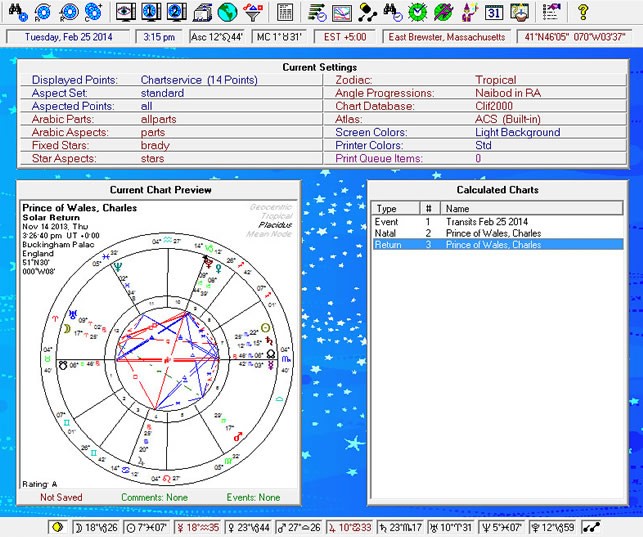
Primary Directions are one of the oldest predictive techniques in astrology, dating back to Ptolemaic and Medieval astrology. They are based on the apparent daily motion of the heavens, projecting the rotation of the celestial sphere after birth onto the native’s lifetime.
This method was regarded as one of the most powerful timing systems in classical astrology.
1. The Concept of Primary Directions
- The technique assumes that 1° of right ascension in the sky after birth = approximately 1 year of life.
- By symbolically moving (or “directing”) points in the chart (Ascendant, MC, Sun, Moon, planets), astrologers can predict major life events.
- It focuses on the rotation of the Earth (primary motion), not planetary transits.
2. How Primary Directions Work
- Identify a significator → the natal point under analysis (e.g., Ascendant, Sun, Moon, MC).
- Track a promissor → another planet or point that will form an aspect with the significator through primary motion.
- The directed aspect → when the promissor forms an aspect (conjunction, square, trine, opposition) with the significator, it represents a life event.
3. Key Points and Usage
- Significators: Ascendant (self), MC (career/public life), Sun, Moon, Part of Fortune.
- Promissors: Planets or other points moving toward aspects.
- Time Conversion: 1° celestial rotation ≈ 1 year of life.
- Accuracy: Often used to time marriage, career changes, health crises, or other fated events.
4. Classical Importance
- Regarded as one of the highest forms of predictive astrology in the medieval period.
- Used by Ptolemy, William Lilly, and other classical astrologers.
- Though complex mathematically, it was seen as more reliable than secondary progressions.
✅ Summary
Primary Directions are a predictive method based on the Earth’s rotation after birth, symbolically projecting degrees of motion into years of life. They reveal major fated events when directed planets or points form aspects to natal significators.